Friday, 13 May 2022

Thoughts on Making Games

I was considering keeping this one a little quieter, but I’m very excited to have started work on a classic point & click adventure game. It’s an amalgamation of a few ideas I’ve had for various games, set in something of an alternative 19th Century rural Ireland. Think maybe Monkey Island, Fate of Atlantis or Broken Sword meets Flann O’Brien and Father Ted. I’ve coined the working title of ‘Monkey Ireland’ as a bit of a laugh.

I think it’s safe to say I have a problem with finishing projects, especially when it moves from the exhilarating beginning stage of planning, conceptualisation and exploration, to the more tedious refinement, polish, and eventual release.

I recently revamped my website, moving from Squarespace to Google Sites. When I was doing my undergrad, I made a quick little website using Indexhibit, a free online portfolio creator with a bit of back end coding. Back in those days I was a bit more savvy with doing some web dev stuff, CSS and HTML, having cut my teeth on early internet, Flash, Geocites and Myspace. I switched to Squarespace around 2014, and only recently dropped it as it was becoming increasingly expensive, nearly £200 a year to maintain what is essentially an online business card. I was thrilled at Google Sites and would 100% recommend it to any other artist looking for an online portfolio. Thanks to the wayback machine, there is an archive of my old website, if anyone is interested. 
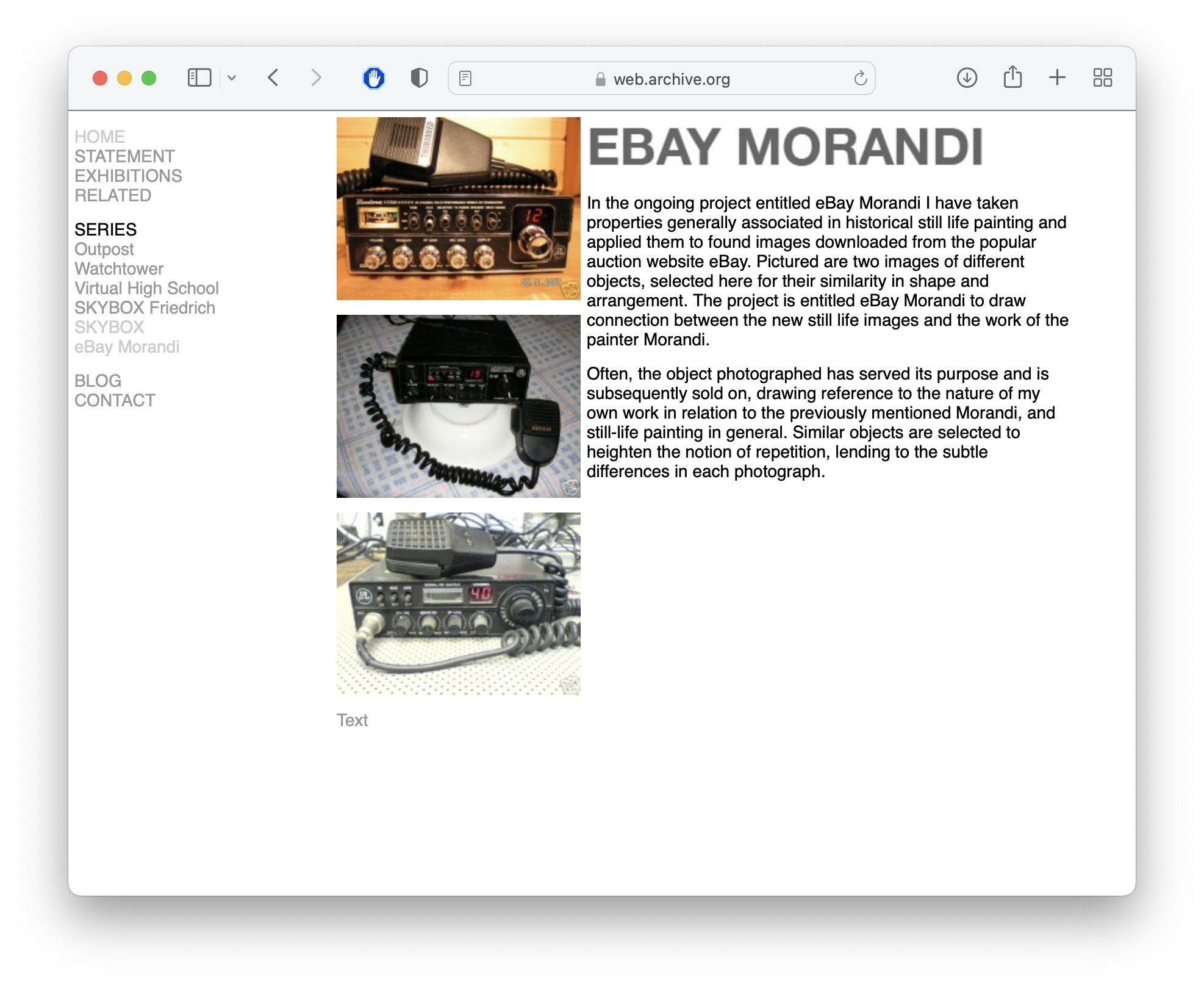
This was a big deal for me, not only having ticked off one of my big ‘to do’ items for this year, allowing me a bit more financial freedom, and also to reflect on all the weird projects and things that I’ve made over the years. So it turns out that I’ve actually worked on, and more importantly finished, quite a number of projects. And there are still more that I need to add to the website still.

One of the biggest problems indie game developers have is starting a project with too much ambition. Over lockdown I began work on making a new Mod for Half-Life, Valve’s 1998 classic first person shooter. I wanted to recapture some of the feeling of playing that game that I had back in 1998 and worked on a few levels sketching out some ideas and basic geometry. I was happy with the results but I’ve decided to put that project on the back burner for now. I’m a little sad to see that mod languish on the depths of my hard drive, but I might return to it eventually. That said, I am happy with my contribution to that side of gaming, with a number of maps made that gained popularity and are still enjoyed to this day.


On reflection, I have a few other games that never quite made it. I developed a short game about being stranded on a small boat during a flood, having to fish for supplies and befriend a small bird, a Flashback style game where you are a robot trying to return to your factory to be dismantled, a game where you control a hermit, scanning a beach for items to reveal more information about your past, and a Duke Nukem 2 inspired platformer where you play as an older, fat, bald and grumpy version of the classic 90’s action hero. All these titles are on hold, incomplete, and maybe never see the light of day. But theres something about making them that thrills me, I think I’m drawn to the process of development more than creating something to release. 

I often think about these abandoned games, and consider maybe revisiting them and taking them to the final stages of polish, but I’m very happy with what I’ve achieved and what they’ve taught me about making things. Every aspect of the creative process offers something different to me. When I look back on these games I don’t see them as failed projects, but more as experiments that helped me learn a little more about my own creative practices. 

Referring back to the abundance of completed projects on my recent website revamp has allowed me to reflect on my actual achievements, on what I’ve taken from start to finish, and what I can do when I put my mind to it. These finalised works are the results of years and years of those experiments, and I’m very grateful to have the ability and opportunity to take these risks.

The new game that I’m working on is another passion project. Like a lot of my work, I don’t exactly plan on making something with wide appeal. Point and click adventure games are a serious niche, with a very small market, but I think if I release the first act of the game, perhaps some interest will allow me to finish it off. I’ve written the script for it, developed the puzzles and locations. On paper, it works, which is good. But now I need to get into the nitty gritty of developing the actual game. I’m confident I can do it, despite not created a point and click game since I was in high school, The wealth of knowledge and experience in the other ‘paused’ projects gives me something to build on. 

By the big mirror in my bedroom, I’ve stuck a few postit notes, detailing things that I need to do. Not exactly Trello, but I’ve found this method to be really useful in helping me manage my projects. Being the first thing I see when I wake up in the morning is so helpful in keeping me on track. Removing the’ ‘Squarespace’ item from this list was very satisfying, much more than ticking a box on a spreadsheet. I’m hoping to knock a few more things off this list, hopefully including one for this new adventure game. 

Thursday, 16 September 2021

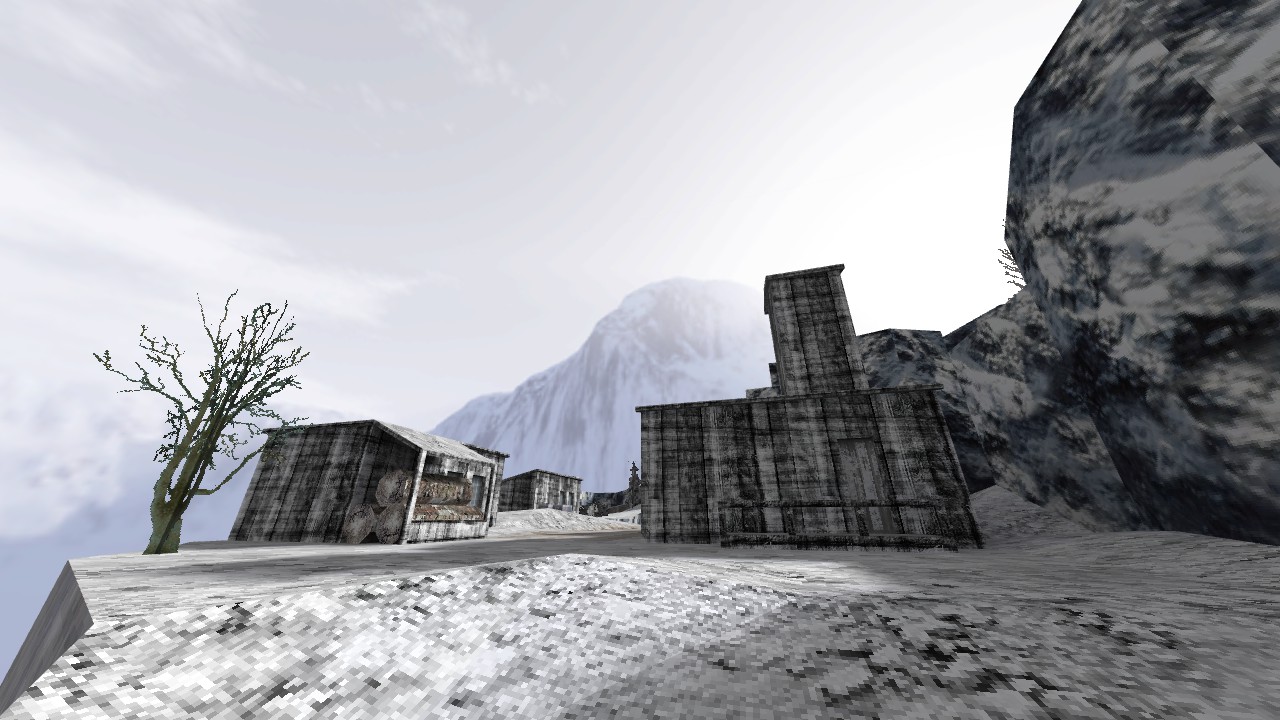
Team Fortress Classic: Forge Revived

A map I’ve made for a 22 year old game has been discovered by another developer and given a new lease of life.


I first played Team Fortress Classic when it came bundled with the Game of the Year edition of Half-Life. I was really excited to try it out, having read the back of the box, noting that it was another full game included. 


This was back in 1999, and the early days of internet gaming, and, I suppose, the internet. Team Fortress Classic was an online-only, multiplayer, team-based game, where everyone performed a specific role to lead to your team victory. I instantly loved it, and found a few great servers to play on regularly. The 56k modem was a bit of a pain in the neck, especially if someone tried to ring through, but it was still an awesome little community and a lot of fun. 


I’d been making games since I had a copy of AMOS Professional on Amiga as a kid. When I got Half-Life, it opened up a whole world of developing for me. It came with the editing SDK on the CD, something pretty rare for the time. The tool was called Worldcraft, since renamed Hammer, and although it had a pretty steep learning curve, it was also incredibly powerful. Not much has changed with the original version compared to the latest-used in creating such wonderful titles as the new VR Half-Life: Alyx. It’s still my game creation tool of choice. 


So I’d made quite a few maps, had some mild notoriety as a mapper, making a few maps for TFC and Half-Life Deathmatch/single player. I also made a few maps for an upcoming mod called Mutiny!, which was about piracy and adventure on the high seas. My brother wanted to be part of that development team as an animator but he didn’t get asked. He was furious when I was part of the team, as one of the only mappers. The mod never made it past alpha, sadly, but it was pretty polished and I might dig out some of the old files if I can find them.


The date on Forge readme file says I’d completed it in August 2007, so already pretty late in the life-cycle of Team Fortress Classic, although still before the online juggernaut of Team Fortress 2 had been released. I think the only server I’d probably be playing that on in those days was a weird UK server called Royston Vaysey, named after the League of Gentlemen Comedy show. I often asked the admin to upload a map to try out and see how it worked. I don’t remember giving this map an official release, perhaps we only played it once or twice and I found it had some errors so I parked it on the back burner for a while, eventually forgetting about it. I don’t even think I’ve the source files for it anymore. I was still in university when I made this, I probably did it between second year and third year, on my summer holidays. Probably before starting this blog!


So fast forward to present day… another keen mapper emailed my old address, asking if they could edit my map to smooth out some of the issues and make it more playable for their Team Fortress Classic Server. I was quite shocked, having forgotten about this little project completely. Of course, I gave permission and asked to be informed of any updates. I was very happy to see some of my old work brought back to life and enjoyed on full servers again. So here it is: finally an official release of the Team Fortress Classic map, Forge. I feel like it could be inspired a bit by World of Warcraft, theres certainly a hint of snowcapped mountains and molten metal. Maybe it was more of an opportunity to mess around with the HL: Rally textures for the snowy roads? No idea, its been quite a while. 


Heres a link to the download, and if you want to play it, it’s available to vote for on the ‘OldSchool TFC’ server. Enjoy!

Monday, 26 April 2021

A Little Update

I haven’t posted in a bit so heres something of an update on what I’ve been working on. 


I’ve had quite a productive lockdown, mainly focused on paintings. I’ve been able to have something of a studio clear out due to the Artist Support Pledge on Instagram, which also allowed me to purchase some amazing works from artists that I love. 


Much of the paintings have been a continuation of my work from last year, looking at contemporary landscape painting around the border region in Northern Ireland. I was interested in ideas about Brexit and issues with rising paramilitaries in the news. I tried to portray stillness in these paintings, and focusing on creating unassuming little vignettes of life on the border, including aspects like old burnt out vehicles or the side of a road, or some signage in them. My dad just informed me that a Give Way sign that I included in one of my paintings had recently been stolen. Great.


I had a painting of a UVF flag included in the Beep painting prize, down in Swansea, although I was unable to attend the exhibition in person due to all the Covid stuff and didn’t want to risk it. The curator, Jonathan Powell, has invited me to partake in an interesting new project about borders, which I’ve just finished up. This should come to fruition later on in the year. Watch this space! I've had a few other digital exhibitions too, check out this screenshot from one last year:


As a response to riots a few years back, I started making a 2D game a bit like a GTA/Lemmings crossover where you have to kettle protesters into a specific area. Unfortunately, a recent upgrade on my computer has made the build a bit unstable, so maybe I’ll spend a day or so soon and work out the kinks and get something usable out of it. Heres hoping. 


I was commissioned a while ago by a friend to do a painting of a famous uilleann piper from an old photograph. This started me on a series based on historic pipers, using black and white photographs as a source. I found it a good challenge to paint these portraits. Pipes, fingers and faces are all hard to capture. I guess I couldn’t have picked a harder subject matter, but I’m very happy with how it’s going.


As a piper with a love of poker, I had an idea many years back to make a deck of cards based on famous pipers/makers. I found my initial idea in an old sketch book while moving house, and I felt that it would be a great time to try this again. The initial inspiration was from a deck of cards that we used to play with when I was a teenager: The Millennium Deck. This had a different portrait on every card of famous politicians, scientists, musicians and artists from the last millennium. I’m about half way through this one, drawing some of the most famous pipers using Procreate on my iPad. I can’t wait to see this finished as a deck of cards. I don’t imagine I’ll sell many but its something I’m doing for the passion of it, and a product I’d love to see in my life. Very niche!


In other news, I’ve been doing a lot of music stuff on the side, working slowly on a Celtic Rock Opera which was a lot of fun, but nowhere near finished. I’ve also recorded two albums of Uilleann Pipes, one doing covers of classic Nokia ringtones on historic pipes, and another of straight up traditional solo piping but recorded on an old cassette recorder that I had since I was a kid. This one is coming out soon, just getting the CDs printed at the minute. I think I’ll release on the next Bandcamp Friday. The ringtones album I’m sitting on for now. Seems like not a great idea to release two strange and somewhat novelty albums at the same time. Well, the ringtones is more of an EP experiment.


I’ve also been working on making a mod for the original Half-Life, trying to recreate some of the old buzz from the single player campaign in a condensed way. I have about 80% of the map sketched out, just need to get some play testing done to see how it flows and then I can make changes if necessary. I’m approaching this one a little differently than normal, building very rough brushwork on the maps and then using Procreate to sketch the details in from screenshots, so I can then make the environments a bit more believable and inhabitable. I wanted to make something along the lines of Half-Life: Uplink, that is, a short 1-3 hour game but tight and fun. I’m a big fan of short games, cant be bothered sinking 40-60 hours into a AAA title these days, I just get bored. 


Ok so thats been a busy year for me, more stuff coming, so watch this space.

Sunday, 26 April 2020

IRL BALACLAVA

About a year ago I spent some time doing a residency in SHIFT in Cardiff. SHIFT was a brand new and exciting art space in the centre of Cardiff, supported by the arts organisation & charity Axis. The space was absolutely huge, having been an underground Virgin Megastore back in the day. I instantly wanted to make use of the environment to make some large scale works, but it took me a little while to actually make any. I focused on smaller works and using the size to better understand my subject matter and composition before eventually sizing up to larger pieces. I’m happy with how that body of work turned out, and how it helped me realise what I wanted to get out of landscape painting.

During this time I experimented with an idea that I had left simmering on the back burner. I’d always been interested in the unusual (and disturbing) crossover of violent materials and children. I’ve written about this quite a bit, particularly regarding The Troubles in Northern Ireland and the freshly apparent glorification of ‘the good old days’ by kids. It’s something that has always been a big part of my work, and when exploring the historic violence in Northern Ireland using video game software, I found there was an inherent link between simulated online violence by kids and the real-life violence that influenced so many.

With this small project, I want to make something that bridged that link whilst also using new technology. I had a few ideas from before about using the idea of a balaclava in my work after seeing a piece by Paul Granjon–that had absolutely nothing to do with paramilitary activity in Northern Ireland–but it inspired me to use it as an object because it's such an iconic and thought evoking symbol.


I actually don’t like using Snapchat, but it has featured in my work and influenced my practice a fair bit. I suppose I referenced it most directly in a project emulating Willie Doherty in a lighthearted series of live online ‘performative’ pieces, and there is some similarity with the work I did with #rambo. I did personally use Snapchat for a few months when it came out but pretty soon after I gave up and stopped updating or checking it. I know it's super popular with kids, I imagine in part due to the 100% inaccessible UI that makes it inoperable to the boomer generation, a bit of an ‘anti-Facebook’. I thought it might be interesting to create something along the lines of a face filter that used a balaclava, and Snapchat’s relatively simple filter-making software allowed me to do this.

When starting this project I found it drew out some parallels between IRL activism, online anonymity, gaming culture, privacy, oversharing and illegal activities. Why not use a balaclava to hide your identity for online activities? I suppose the V for Vendetta Guy Fawkes mask would be more appropriate when referencing these issues, but as someone from Northern Ireland, it's hard to move past the image of a balaclava and its inherent implication.


As it stands, I might break this work out for an exhibition some time. I understand it is possible to use geofencing to localise a Snapchat filter for events and such, or do I have a device in the exhibition with Snapchat locked in for people to post their own balaclava photos? Or why not both? Maybe a running feed on a display of people’s filtered faces when posted on social media and tagged with a specific hashtag. The balaclava model might need a little more fine-tuning and tweaking but the overall concept and execution is solid. Now to work on a face mask & ventilator filter for this COVID-19 pandemic…

Sunday, 1 March 2020

Randomly Generated Landscape Paintings

I’ve been working on this project since my Masters but only recently shown any of the outcomes to the public. You could say that this represents the ‘physical object’ outcome of my Digital Border work, as it stemmed from the same randomly generated landscape game that I made using Unity 3D.


My process with Digital Border was to create these unique landscapes using a Perlin Noise algorithm. I then added in generic game objects from found online sources and created these little narrative-driven vignettes that were ‘photographed’ in-game. The photos were reproduced as 9x16cm acrylic glass on aluminium, emulating the language of a mobile phone screen. I also recorded a few and replayed as video installation work (see my exhibition in Nantes and also my MFA show).

During this time, I was using the same algorithm to generate landscapes with the idea of producing physical work of charcoal on paper with them. I made perhaps 10 or 15 works based on this but never uploaded them or shown anyone. They were purely run as tests–and I was happy enough with them–but my focus was on digital work at that time.

I’ve gotten back into painting since then, so I decided to expand on my simple charcoal sketches and developed them into full-blown paintings. This came from a random opportunity in Splott Market. I was having a look at the car boot section with a friend of mine and came across a load of floppy disks that were going for free. I instantly knew I had to paint on them, and that paintings derived from digital source imagery would be perfect for them.


Also, painting on floppy disks? Sure–why not? I had someone comment that they were reminiscent of Richard Higletts little landscape paintings on old paintbrushes, and I didn’t think about it but there is a familiarity there and I really like Higlett’s work. I had a bit of trouble figuring out how to best approach the surface for painting with oil. I initially tried to mimic canvas with a heavy gesso crisscrossing but then I realised how much I actually hated painting on canvas. I dipped the disks in generic varnish a few times to prepare the surface and found that this worked much better.

I applied the same approach to preparing the wooden panels for painting. Rather than gesso (which I normally do) I found this gave a fresh and interesting flat surface for painting on. My favourite will always be painting on sheet metal or MDF, but this worked well too. I might try some varnish with canvas at a later date and see if it give that amazing smooth finish that I love.

So from these initial charcoal ‘en plein air’ sketches evolved a body of work around the same subject matter and with cool & unique paintings on 3.5” floppy disks. They were recently shown at a View from the Edge in M.A.D.E. Gallery in Cardiff, with other works by landscape painters with unusual approaches to the subject matter. 

In the past I've made some work exploring plein air painting with digital images. I found the act of working from 'live' sources than working from photographs breathes extra life into the process and the introduction of random chance and change adds to the immediacy of the paintings. When I painted from in-game DayZ, there was always the danger of an incoming Zombie or enemy player ruining the scene. The environment forced my hand to make quick decisions about how to approach the work, and I enjoyed this freedom and embraced immediacy of painting like this.


I’m currently revising making paintings from webcams. This was a series I’d only made a few pieces for, and I look forward to exploring the process again and seeing what new outcomes arrive.

Thursday, 31 October 2019

Endurance Art and Crazy Self-Imposed Gaming Challenges

I was thinking about the relationship between performance art and the performative aspect of some digital artworks.

Pushing the human body to it’s physical and mental limits has featured in many performance artist’s works. Perhaps the best-known example of this ‘endurance art’ is American artist Christ Burden. His performances such as Five Day Locker Piece and Shoot (above) put the artist through great risks, physical pain and endurance.

We see virtual similarities within the gaming community. Things like the World of Warcraft Iron Man Challenge, or the Nuzlocke Challenge in Pokemon (amongst countless other challenges) allow gamers to get more out of their games by self-imposing limits, very often to the point of ridiculousness. The rise of streaming, social media and online multiplayer gaming have allowed these challenges to grow, with people now able to get immediate feedback from the community from their exploits.

I had the idea of doing a virtual marathon in-game after playing a little on the 2002 PS2 title, The Getaway. In this game, the developers broke significant ground by creating a virtual version of London that was vaguely recognisable. The now-primitive graphics were cutting edge for the time, and having a digitised version of London as an open-world gaming environment was fantastic. For example, the second mission in the game calls for you to visit ‘The Reptilian’ gallery in Hyde Park (read: The Serpentine) and steal a Chinese artefact, before making an escape across London to your hideout in Soho, chased by Triads and Police.

So I had the idea of drawing up a route based on the London Marathon and recording my run around virtual London as a performative work. Take some water bottles, energy gels, buckle in with my PS2 and see how many hours it takes to run my avatar around 26.2 miles of virtual London without dying.

Talking with a painter recently about the relation between ultra-endurance running and landscape painting sparked further questions on how learning an environment through repetition helps to understand better. The outcome is more than just a visual replication, but something towards a more in-depth representation of the entire landscape. Painting through the image and with a better understanding.

As a runner (albeit, not yet interested in 100-mile ultramarathons) I had questioned this idea before. There is something to be found in the detachment of painting a landscape from a single source image. Perhaps this is more to do with how we have mostly second-hand experiences through photographs and other media these days. It could be a psychological thing. Still, when we look at, for example, Plein air painters, is it possible they’ve developed a deeper connection with their landscape, and this has, subsequently, informed their work differently? Probably more to unpack here than is necessary for a short blog post.

Sunday, 9 June 2019

Red Dead Fashion

I recently stumbled across this weird and unique subreddit:

r/reddeadfashion has taken gaming avatar customisation to a new extreme, evolving into some strange Red Dead Redemption based Instagram vs IRL simulacra.

We have redditors creating digital avatars, customising their hair and appearance before kitting them out with some unique in-game clothes. Some are trying to mimic real people/celebs and other pop culture references (as seen recently in Soul Calibur), but it’s the submissions that are just trying to look cool or unique that interest me the most. Here are a few of my favourites so far:


Wednesday, 5 June 2019

George Glen Uilleann Pipes

FIRST IMPRESSIONS

I often write about music and instruments here, but this is going to be a very special post about a new set of uilleann pipes I have come to acquire. A month ago I bought a set of pipes from nonother than the caretaker of my old school in Omagh. The instrument was found in the attic of his house by the previous occupant (who had left them there). Considering the caretaker had been in the house for some thirty-odd years, it's safe to assume the set hasn't seen any action in a long time.

Having just seen grainy potato-phone photos of the pipes online, I was able to assume the components were mostly original, and that the maker was George Glen. Finally viewing the set in person confirmed my assumptions. Below are some of my initial thoughts on the instrument.

Glen made pipes in Edinburgh from approx 1900-1920. They match up with the set in the National Museum it Scotland, although this set has folded regulator keys, rather than the standard keys on the museum set. The most obvious comparisons are the highland style combing on the main stock and the bass drone. I haven't found a stamp as of yet.

George Glen also made great highland bagpipes, and there are some surviving examples of these too. He was related to a few other makers (Alexander Glen, David Glen & more) who were into all kinds of pipes and owned a music shop in Edinburgh.

The set seems to be mostly original, just missing the chanter and baritone drone.


On initial inspection, the regulator keys look like they could be aftermarket additions, perhaps from a broken keyblock repair. I reckon the consistency across the keys and lack of spring channels in the wood suggest they are original. The popularity of this type of key among Glen's contemporaries O'Mealy and Hamilton, etc. may help support this. Then again, the big D baritone key looks particularly like the work of McFadden, but I imagine the extra fold at the bottom of the key was made to accommodate a redrilling of the tone hole.

The turning on the drones and regulators suggest that the same maker made them.


The keys are pin mounted by a most unusual method: the pins are made out of a long thin strip of metal that has been folded against itself and made into a 'T' shape.  The only key that is missing this pin is the long D key, further supporting the idea that is was moved aftermarket (perhaps a C# to D?).

The bass drone puck looks like it is made out of two-part ivory and joined together. It is unusual as there is a folded rush from the puck into the connection brass tubing, perhaps to flatten the tone or dampen the sound.

The bag looks to be of good quality leather and ties the chanter stock in at the top. The velvet cover could have been blue but is now mostly discoloured. The main stock has the highland style combing as seen on the other Glen set in the National Museum in Edinburgh. The outer silver ferrule looks like it could be aftermarket, and has been held in place with paper.  The bellows stock appears to be original but missing the ferrule. The turnings match up with the other parts of this set. Somewhere along the line, the connection has been poorly whittled away, perhaps to suit a smaller piper.


The bellows are in good condition, with a very O'Mealy-like appearance. The leather is tacked to the sides of the pipes, with a shallow channel for the leather. There are remains of a decorative green fabric. The inner belt is screwed to the paddle, and the outer one is attached to the back of the paddle at one end. There is a hook at the top of the paddle, after the inlet, where the belt can be attached, allowing for greater access to the regulators.

The box is nicely made with dovetail joints and a red lining. I can make out the name Galloway written in pencil on the inside.

My first investigations into disassembling the set have brought up new questions: how are some of the regulator keys are squared off at the pads and some are not?  The G note on the tenor regulator appears to have been sharpened twice with a plugged & drilled tone hole. The ivory mount on the tenor drone seems to be threaded like a screw–is this a replacement from a highland set? So many questions.

I'm looking forward to new insights revealing themselves with this instrument over the next few years. Once it's up and running, I have a few chanters that might suit it. Watch this space.

Links:

A few more photos: https://imgur.com/gallery/4Fkbu1M

Museum instrumet:
http://nms.scran.ac.uk/database/record.php?usi=000-000-579-941-C&scache=1l8ax8gxmn&searchdb=scran

Info on Glen: http://www.thebagpipemuseum.com/Glen_George.html


Saturday, 4 May 2019

Banning r/me_ira: What happens when you drop the /s?


Reddit occasionally bans controversial subreddits, chiefly based on moral decisions. A few examples would be digital cesspits such as r/beatingwomen, r/incels and more recently r/watchpeopledie.

r/watchpeopledie was removed the day following the horrific 2019 New Zealand mosque mass shooting, where it had posted videos glorifying the violent event. There is a similar thread to last week's banning of r/me_ira.

r/me_ira was a place for witty user created content about The Troubles in Northern Ireland. The name comes from r/meirl, a popular subreddit with self-deprecating memes, looking at the funny side of being a depressed millennial. r/me_ira was followed the same concept, with the same grisly humour managing to dovetail perfectly with the Northern Ireland mentality.


I must admit, I have enjoyed and laughed many times at the memes, with razor-sharp critical commentary and political satire on the events in Northern Ireland. However, the 'Irish' sections on Reddit have always been populated with Irish-Americans, and this is where the problems started with me_ira.

I've written about how our native gallows humour predates The Troubles, citing Flan O'Brien as an example with his seminal masterpiece, The Third Policeman. I wonder if this humour can be interpreted as some kind of coping mechanism? Either way, it's clear that this particular subreddit was misunderstood by many Irish-American posters.


The sarcasm of this parody subreddit was utterly lost on these trolls, and their ridiculous pro-IRA contributions were largely ignored and downvoted. As people from Northern Ireland, we like to laugh at ourselves. r/me_ira offered a Hole in the Wall Gang approach to the historic conflict issues for the post-Good Friday Agreement generation. By contrast, the pro-IRA posting from mostly American Redditors failed to embrace the self-deprecating nature of the subreddit, attempting to stir up Republican action from across the water in some kind of self-righteous Hollywood crusade.

There is a lot to unpack with this kind of internet behaviour. We see a common theme run through all right-wing/nihilist/extremist/alienated cesspools across the Internet. The predominant use of memes is perhaps one of the weirdest things to investigate. Easily sharable and instantly recognisable, they offer simple punchline opinions with often funny or cartoonish imagery, disguising their actual negative implications. It's easy to understand how the humour in a subreddit like r/me_ira would be misinterpreted as one that glorifies violence and nationalism, as opposed to one which condemns it. In the end, it appeared that few could distinguish between this fine line, and an ever-increasing controversial contribution from right-wing 'plastic paddy' America led to a full ban.

Like most subreddit bans, the ban on r/me_ira was triggered by the reaction to a horrific event: the murder of Lyra McKee. One of the few moderators of the subreddit commented:
'…it is good it came to an end. It was filed with yanks as many others mentioned and trying to ban all the ignorant folk was hard. The jokes got repetitive, and it went from okay to dog shit when Lyra McKee died (rip).'
'Parody turns to support when the educated craic dealers are switched with ignorant yanks. Fun while it lasted, but I guess that's another Irish sub freed of yanks.'
They are referring to the harsh criticism of McKee and the glorification of the idiot children who shot her. One American 'Fenian' commented 'No one should care about a Fag Journalist'. It's so strange to witness a comedy subreddit evolve into the very thing it tried to parody. We are surely better off without it.

Wednesday, 24 April 2019

Lyra McKee

Journalist Lyra McKee was a massive influence on the development of my art practice over the past two years. She was sadly shot last week at a riot in the Creggan area in Derry. Police have since arrested an 18 and 17-year-old concerning the murder. I thought I'd dig up some writing I'd made about the subject.

Here are three extracts from some pieces of writing from last year, where Lyra McKee's journalism had influenced my decisions about how to progress with my practice. I was trying to boil down the essence of her article on post-Good Friday Agreement depression and her report on the subject gave me a bird's eye view and the clarity to tackle it head-on.
I’d like to try and convey an auto-ethnographic sentiment somehow via interactive & narrative work and feel that manipulating game engines as a medium will allow for a wide net of scope and execution. 
I made the decision to create work about the border situation in Northern Ireland, shifting from purely implied and understated narrative to using some specific anecdotal tools such as interview recordings or text, in conjunction with my more traditional landscape approach.

There is an excellent article by journalist Lyra McKee entitled Suicide of the Ceasefire Babies, which delves into post-war intergenerational depression in Northern Ireland, and I’d like to dig a little deeper into this specific area myself through such conversational interviews.

In previous works, I have experimented with the introduction of human figures with simple artificial intelligence, exploring their virtual environments autonomously. I found that in doing this, the overall concept suffered by having scores of digital men running around and killing each other randomly. Although this method is more faithful to the in-game online confrontations that I had been investigating, I felt that it had undermined the feeling of foreboding and the tension inherent in my other works, in particular, the project Digital Border.

Much later, following a long period of experimentation, I decided that my work would switch back to an implied narrative, with the preparatory work I'd made in recording stories etc. to go toward a critical paper exploring the relationship between post-GFA tales (such as McKee's) and the morbid eccentrics of Flann O'Brien.
My interest in this subject came after reading an article that helped to clarify my own experiences with growing up in Northern Ireland after the majority of the ethno-political conflict (The Troubles) had ended. Suicide of the Ceasefire Babies, written by Lyra McKee, outlined mental health issues experienced by people who came of age after the Good Friday Agreement.
The Good Friday Agreement was seen as a significant political development during the peace process in Northern Ireland, signed on the tenth of April, 1998. It was marked as both an agreement between the Irish and British governments, and between the majority of the political parties in Northern Ireland. It is understood by most as the unofficial end of The Troubles. By this time, most of the bloodshed had happened, and any post-GFA incidents were more widely condemned and typically seen as attempts from the lunatic fringes of paramilitary groups. Life in Northern Ireland after the Good Friday Agreement was about optimistically rebuilding the country and vast amounts of government and EU development money was introduced to bring both sides of the community divide together.
For people growing up in this time of ill-placed optimism, it appeared that there was little to worry about. Unfortunately, it only took 16 years for the number of post-Good Friday Agreement suicides to overtake the total number of conflict-related deaths during 40 years of The Troubles. Where it is clear that a period of community and mental healing was necessary, it appears that much of the mental health issues of living in a war zone have permeated from one generation to the next. Northern Ireland is unique in this respect, in that the conflict has been relatively recent, the location was in a first world country, and that there has already been an extended period of healing. Additionally, Northern Ireland was revealed to have the highest level of Post Traumatic Stress Disorder, beating current live conflict locations such as Lebanon and Israel.

Much research has been done in this area, most notable by Queens University Belfast lecturer Mike Tomlinson. It was not my objective to reinterpret or improve upon Tomlinson’s work, but to try to document and explore these experiences in some small local way.

This led me to try and understand this kind of intergenerational trauma through family (folk) stories. I collected a number of these via both audio recordings and written means from friends and family, and read up on articles posted by people in similar situations. My initial thoughts were to try and use my artistic practice to open a dialogue about these stories, including creating a self-playing game with some of the stories as both backdrop and direct narrative tool. I am ultimately happy with the work, but I feel that instead, my strengths in this area lie in using less direct methods of storytelling.

And a little on rising paramilitary glorification amongst the youth. I've written about Paul Donnelly and his interview on the Blindboy Podcast. Note that the following piece was written pre-Cambridge Analytica yet it is somehow strangely foreboding.
Part of the retelling of these stories is to indicate the idiocy of youth and for the future generations to attempt no such objectives/idiocies/follies. There is a worrying trend amongst the younger generation today, notably in areas of Belfast but easily imaginable in other locations around the country. The glorification of The Troubles for young people seems to be a growing problem. Belfast historian Paul Donnelly describes working with support groups for young people and how in some situations there is an uneasy reverence for people who have experienced The Troubles first hand. ‘It must have been class’. This is why we need stories like these, not only to show the flawed nature of these acts but also to re-contextualise this in an understandable modern day situation. 
I estimate that part of the rise in popularity of this problem might be from the use of social media and the internet amongst the younger generation. This ‘echo chamber’ allows people with dangerous fringe ideas such as nihilism, fanaticism, and sectarianism to find solace and blossom in these online communities. This runs in parallel to the rise in online countercultures such as Incels, 4chan and the_donald. 
Powerful algorithms on websites such as Twitter, Facebook and Reddit actively redirect your own ideologies back into your timeline daily. This is dangerous in this context in that it allows for deeper separation and less critical debate, but in the context of blooming online sectarianism in the youth of Northern Ireland, it is suddenly much more severe. 
On the flip side, it cannot be under-appreciated what role the internet played in this healing process. Early internet days of fastfude, etc. was an online forum for people from Northern Ireland’s two communities to come together and discuss music. This was much in the way that the Belfast/Derry punk movement in the 1970s allowed both Catholic and Protestants to mix freely. Although fastfude is no longer functioning, those music driven communities have branched out into a healthy discussion into other areas of the internet and social media platforms. 
I feel this highlights a significant diversion between the storytelling of Flann O’Brien and modern internet communications. In each of my stories, the hero is ultimately an anti-hero, providing life-lessons through their own mistakes. It’s difficult to imagine anyone sympathising with the unnamed narrator or his murdering accomplice in The Third Policeman, but it is possible that if the murders in the book had a sectarian edge that it might be read differently, or perhaps even glorified.

I'm not sure I'll post the rest of the paper on Flann O'Brien. Maybe someday it will make an appearance.

Monday, 18 February 2019

Thoughts on new paintings in SHIFT


This residency started with two projects in mind: to develop new 2D for a show in Waterloo Tea and to make a single image as a run of prints to be my contribution to the SWAP Edition 4: BREX-Kit. 

With my 2D work, I wanted to delve deeper into a long-term project about contemporary landscapes in Northern Ireland. I had already amassed an extensive collection of source imagery and preparatory studies and wanted to take this project to the next level within this residency. 

Before starting, I had some vague ideas about producing landscape paintings based on images taken from locations around the border. I had made some attempts at gathering pictures and videos in preparation for my work on Digital Border, last year, and I understand my recent developments as something of a continuation of this project, with the introduction of painting and drawing as a means of communicating my thoughts around this subject.

Throughout the residency, I have produced numerous works in different media. These have helped me in considering what tools I wanted to use to realise the new work fully. I have settled on striking a balance between the traditional painting of the Tory Island artists and the shiny mini-screen aesthetic of my previous Digital Border works.

I feel like I have indeed developed my concepts and understanding of what I want to do with the subject matter, and now I can focus on producing more pieces like this within these confines.


My experiences with revisiting Digital Border for the SWAP Editions: BREX-Kit has been explained here.

Thursday, 31 January 2019

Revisiting Digital Border

I’m not one from shying away from revisiting old ideas and bring new concepts, techniques or approaches to the work in an attempt to develop my practice in some new direction. I’ve written about this a little before, when making my emoji still-life paintings last year and how they are a continuation of my eBay Morandi project from 10 or so years ago.
I would consider Digital Border to have been a very successful work for me. It has opened a number of doors through exhibitions and awards (it was shortlisted for the 2018 Lumen Prize). This work was an attempt to make some physical objects out of an abandoned interactive game project. The game had just begun to pivot towards using a different tool to create it as I felt that it didn’t fit the narrative or approach that I wanted to fulfil my project: looking at topographies, immigration, Brexit, intergenerational trauma-related stories and modern day issues with conflict areas. So, as I was drawing the experimental stages of this project to a close, I decided to try and make the most out of the scenes I had already created. Although the work was unsuitable for a 3D interactive game, I felt that I had created a beautiful randomly-generated environment, and, through populating it with found in-game objects, camera tricks, rain and ‘atmosphere’, I had made something that wholly captured the mise en scène I was looking for.

After some further investigation, I created digital photographs of my generated environments and had them printed on small gorgeous acrylic/aluminium panels as some kind of miniature votive mobile phone worlds. These were exhibited in a few shows (In Cardiff, Brighton and Nantes) and shortlisted for the 2018 Lumen Prize.

I made a proposal for SWAP Editions latest open call–BREX Kit. I was to make another one-off print to be included in their Brexit artist first aid kit. My proposal was selected and I had to make this new work.


I ran into a few difficulties: It had been some time since I last made one of these ‘digital photographs’ and I had to manipulate some older games in Unity to make it work. I had since made some Digital Border video pieces and also experimented with a dual-screen live projection, resulting in issues with in-game cameras. Additionally, due to this, I had reduced some of the post-processing effects such as vignette, bloom and colour correction. This all had to be reintroduced and was an absolute pain to find my original settings. It’s kind of back to where it should be, but I did keep the wide field of vision from the video work because I liked its drama and it also helped to differentiate this new piece from the previous work.

My other issue was how I was going to produce 18 editions of this work. The acrylic/alu panels are super sexy, but they do cost a fair bit to make and take a little while to be printed and shipped from Germany. I wanted to try some giclée prints after having a few really nice ones made for the South Wales Pipers Club (a musical endeavour close to my heart). We had some giclée copies made of old Irish piper paintings to raise funds for the club and also for people to own them if they wanted. I was thrilled with the results, and so I ordered some Digital Border prints from the same printers.


They've just been delivered to the curator in London, and I am looking forward to seeing how the work will appear in the exhibition and as part of the 'Brexit First-Aid Kit'.

Wednesday, 16 January 2019

SHIFT Residency

Last week I started a residency in SHIFT–an exciting new space in central Cardiff.

SHIFT is not long established and is run by Jon Ruddick and Pria Borg-Marks as a workspace for artists to make and test out large scale art. The space is in an old empty shop below the Capitol Shopping centre in Cardiff. I recall the place as a seasonal shop selling Halloween and Christmas stuff many years ago, but it's been vacant for a long time now. It is absolutely massive and an excellent location for new large scale artwork.

I have a few projects that I need to work on during my time in SHIFT. In Spring I will be taking part in SWAP Editions, where I will be creating a new & exclusive piece in my Digital Border series. I’m looking forward to relearning my processes for producing those pieces. I think I can probably work out how to make the landscapes and snapshots from memory and last year’s studio notes. Fingers crossed. My other project is one I have been meaning to investigate for some time.

I’m interested in what it means to be a contemporary Irish landscape painter in this post-internet age. I’m thinking about looking at the written descriptive elements of the Tory Island Painters and how that might feed into the addition of text to images shared on social media. I’ve spent some time wrestling with these two disparate elements and thinking about how they might be combined through my own work. I’ve written a bit already about the Tory Island school, and how they’ve influenced me. I think they represent an independent art school–and one that is uniquely Irish.


Hopefully, I’ll be able to make the most of my time in SHIFT to not only produce some exciting new work but to also develop these two projects in ways that I would not have been able to otherwise. Watch this space for more info when I get a chance to write it up.

Thursday, 13 December 2018

FIRST BLOOD AND FACEBOOK FILTERS

NEW WORK: #rambo

This is a project I’ve been attempting for a while. It’s taken inspiration from two separate incidents: one wild night in the Brazen Head in Dublin spent messing around with Facebook filters, and an old video piece by Al Pritchard featuring the climactic scene from First Blood delivered ‘en Español’.


Previous works have explored both emoji culture and online social media sharing, as well as re-appropriation of pop culture imagery. This project is something of a Dadaist approach to these different articles.

This work started off with a Facebook Messenger filter over a live video of First Blood. I made use of the ‘Medusa’ filter, with a head of snakes and a yellow forked tongue when the mouth opened. My initial thoughts were to have the work as a video piece, but after a few attempts, it became apparent that it was working better as still images. These stills were easier to edit, and using the post-processing of Facebook Messenger I ended up with some jpg files with filters, stickers, emoji, text and backgrounds.


When I describe these works on my website, I talk about the relationship between the film's core themes (depression, PTSD, and post-conflict mental health) and the blasé nature of millennial internet users approach to these issues. To those not overly familiar with the franchise, John J. Rambo is the typical gun-totting 1980/90’s macho man musclebound hero. The first film actually portrays him fairly different to this popularise image from the sequels, in that there is only one (!) death, and that it uses his mental health issues to explain his actions. It does this through horrific flashbacks from his experiences in a Vietnamese concentration camp, culminating in his eventual mental breakdown at the end of the film where he discusses in graphic detail how he and his squad were ambushed and mostly killed. I wanted this to feed into the work and be reinterpreted through the prism of self-deprecating internet subcultures such as r/meirl and suicide memes.

Friday, 7 December 2018

NEIL SHAWCROSS

40 YEARS OF PORTRAIT PAINTING


I think I was living in Bath at the time, when Shane, an artist friend of mine, went to an exhibition opening with my brother. The exhibition was in a small gallery in rural Donegal, and I was familiar with it having been asked to play music there on a few occasions. The exhibiting artist was Neil Shawcross, a Lancashire native who had been living in Northern Ireland since the 1960s. Shane had the opportunity to speak with Mr Shawcross, who kindly offered a private tour of his new retrospective in The Ulster Museum. They arranged a date for the meeting, and Shane asked if I wanted to go up with him as I was to be back home that week.

So we both hopped on the Goldline 273 to Belfast and walked out from the Europa bus depot to meet Neil at the Ulster Museum. We picked up a bottle of Rioja on the way, to say thanks (Neil took great pleasure in informing us that the opening night of his exhibition had the most wine ever drank at the Ulster Museum and that they even had to go out for more when the supplies ran out). When we arrived Neil was great to chat with, we talked about art and the Tory Island painters as I had recently come back from a painting scholarship on the island. One of Neil’s friends and their daughter joined us, and we went off on the tour of the exhibition.

The show was a retrospect of his portraiture entitled 40 Years of Portrait Painting, with 34 life-sized oil on canvas pieces, displayed in chronological order. I was fascinated by his approach and the choices he made. I loved his use of pencil, charcoal and loosely applied oil paint to create these fantastic large-scale works. In one of the first in the series, he explained to us how he was experimenting with drawing a line along the bottom of the canvas to serve as the ground, his inspiration comes from observing how children paint pictures and also from outsider art (such as the previously mentioned Tory Island artists). I found this approach fascinating, and much of this has gone on to influence my own work in concept, technique and composition.


As we walked through the large rooms of the exhibition, a Primary School group was busy milling about. Each kid had a pencil and paper and was trying to recreate their favourite works for a class project. Neil walked up to one of the children, looked at their reproduction, and then signed it ‘Shawcross’. He then remarked ‘that's more like it now’. I doubt the child knew he was, but it was a genuinely nice gesture.


We finished up the tour and moved across the street to the William Conor Cafe, where I was completely astounded as to how many espresso shots Neil had in such short succession. Artist Clement McAleer joined us, offering myself and Shane up to attend a private view of his work in the Gordon Gallery in Derry. Before we parted, Neil offered to send us some books, which arrived a few weeks later, again, signed like he had done with the kids drawing.